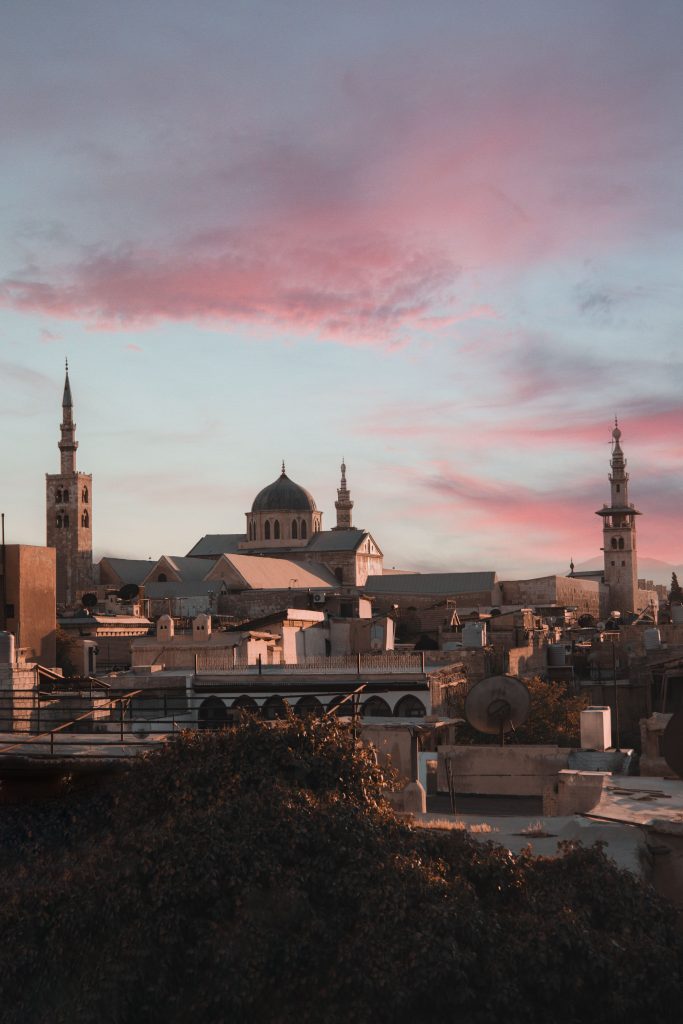
Damascus is often called the oldest continuously inhabited capital in the world. People have lived, traded, prayed and cooked here for thousands of years. Today the Syrian capital is a city of narrow stone alleys, busy markets, courtyard houses scented with jasmine, and some of the finest food in the Middle East. For students of Arabic, it is also one of the best places in the world to hear and practice Syrian Arabic as it is spoken every day.
This guide covers the history of Damascus, the sites worth visiting, local culture, food and the people who make the city what it is. It also explains how you can learn Arabic, volunteer or intern here with Volunteer in Syria.
Table of Contents
A City with Thousands of Years of History
Damascus grew up around an oasis fed by the Barada River, on the edge of the desert at the foot of Mount Qasioun. The green belt of orchards around the river, known as the Ghouta, made it possible to farm and settle here very early on. The city is mentioned in ancient Egyptian records and later became the center of an Aramaean kingdom.
Over the centuries Damascus came under the rule of the Assyrians, Babylonians, Persians and Greeks. The Romans later rebuilt much of it on a grid, and parts of that plan survive in the Old City today, including the long street known in the Bible as Straight Street. Damascus also has a special place in Christian history: according to the Book of Acts, it was here that Saint Paul regained his sight and was baptized.
The city reached its greatest importance in 661, when it became the capital of the Umayyad Caliphate. From Damascus, the Umayyads ruled an empire that stretched from Spain to Central Asia. Their great mosque, completed in the early 8th century, still stands at the heart of the Old City.
After the Umayyads, Damascus was ruled by a series of dynasties. Saladin made it his base in the 12th century and is buried here. The Mamluks and then the Ottomans left behind mosques, schools, bathhouses and caravanserais. The Ottomans ruled for four centuries, and Damascus became a key stop for pilgrims traveling to Mecca. After a period under French mandate, Syria became independent in 1946, with Damascus as its capital.
The Old City of Damascus
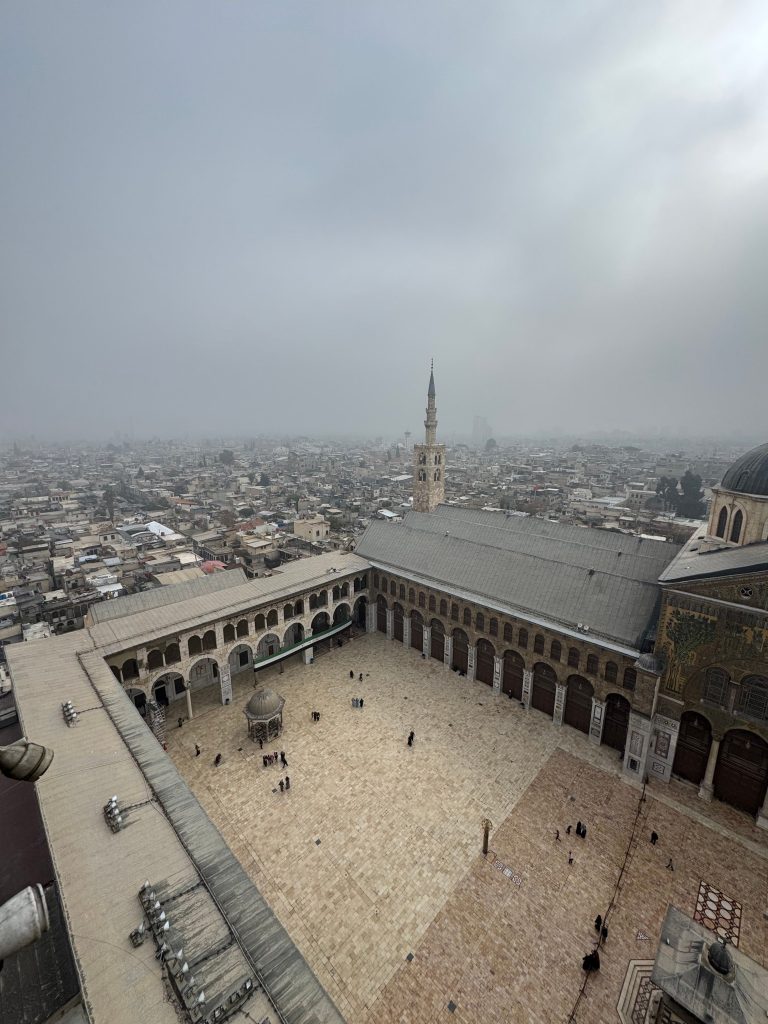
The walled Old City is the heart of any visit. It was listed as a UNESCO World Heritage Site in 1979 and is full of history: Roman columns, medieval gates, Ottoman markets and houses that have been lived in for generations. Seven historic gates lead into it, including Bab Sharqi (the East Gate) and Bab Touma (Thomas’s Gate).
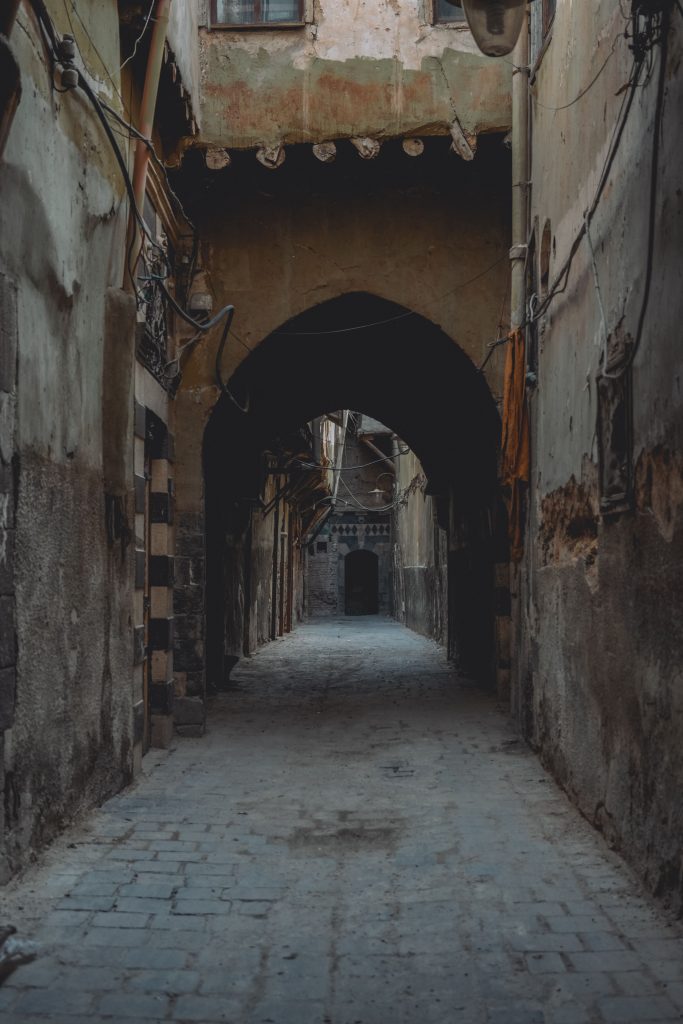
The best way to explore it is on foot. The lanes are narrow and winding, and every turn seems to lead to a hidden courtyard, a small mosque, a church, a workshop or a café. Getting a little lost is part of the experience, and locals are always happy to point you in the right direction.
Top Sites to Visit in Damascus
The Umayyad Mosque
The Umayyad Mosque is one of the oldest and most important mosques in the world and the defining landmark of Damascus. Built between 705 and 715 under Caliph al-Walid I, it stands on a site that was once a Roman temple of Jupiter and later a church dedicated to John the Baptist. A shrine said to hold the head of John the Baptist is still inside the prayer hall, and the mosque is honored by both Muslims and Christians.
The vast marble courtyard is lined with golden mosaics showing rivers, trees and palaces, and is surrounded by three minarets. Visitors are welcome outside prayer times. Women are asked to cover their hair, and robes are usually available at the entrance.
Souq al-Hamidiyah
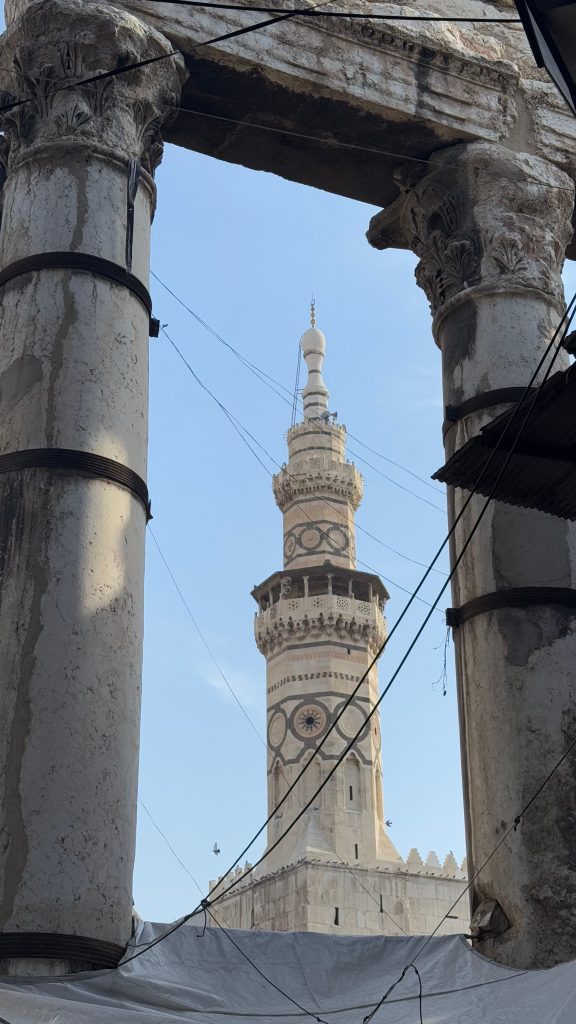
The covered Souq al-Hamidiyah is the city’s most famous market. It runs from the Citadel to the Umayyad Mosque under a high arched iron roof, and the morning light shining through its old bullet holes creates a striking effect. Shops sell clothes, fabrics, perfumes, sweets, spices and souvenirs. At the far end, the market opens onto the tall columns of the old Roman temple, right in front of the mosque.
Straight Street and the Christian Quarter
Straight Street crosses the Old City from west to east and is lined with small shops, workshops and cafés. Its eastern section leads into the Christian Quarter around Bab Touma, an area of old churches, guesthouses, restaurants and lively streets. Nearby you can visit the Chapel of Ananias, an underground chapel linked to the story of Saint Paul.
Azm Palace
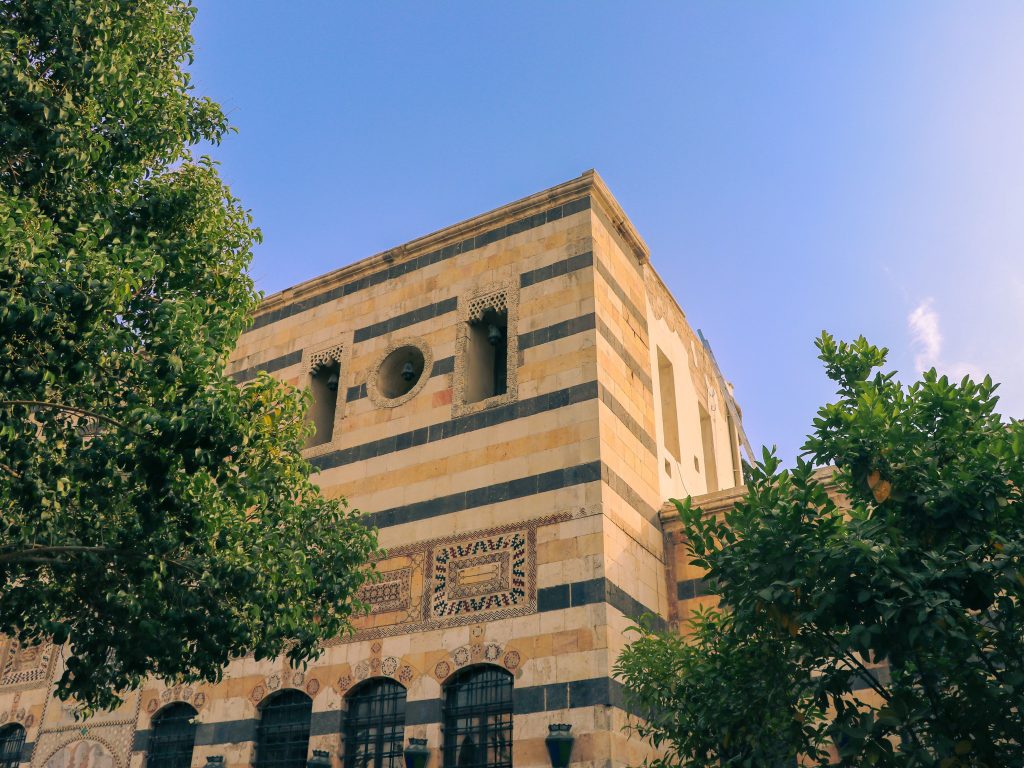
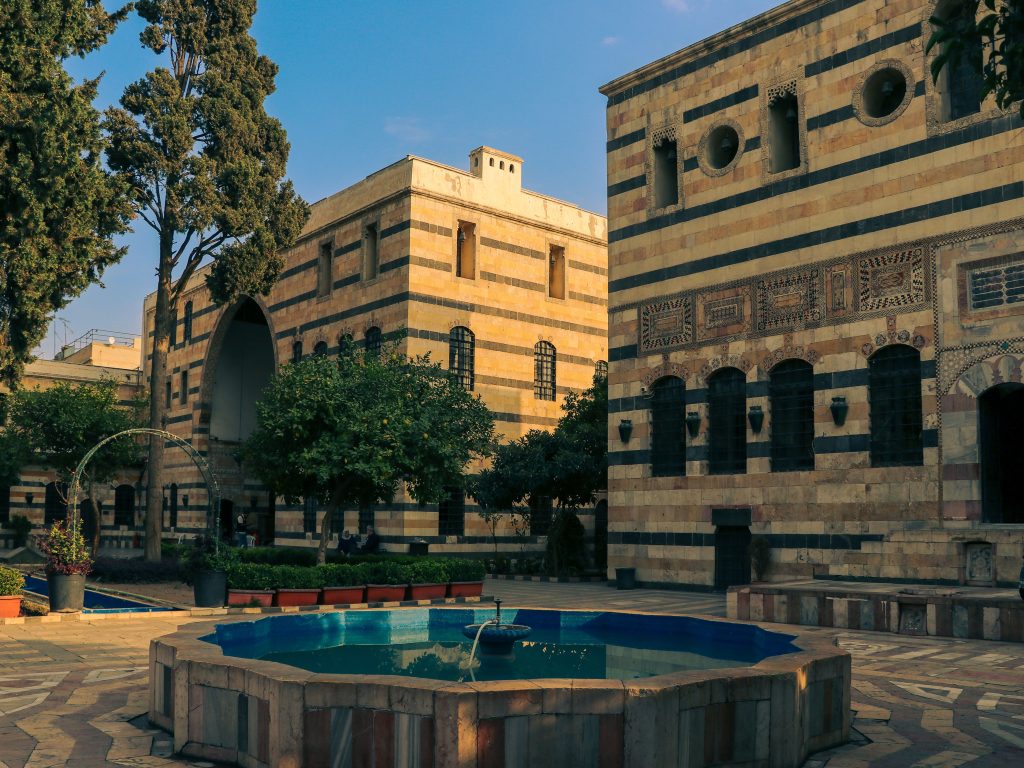
Built in the mid 18th century for As’ad Pasha al-Azm, the Ottoman governor of Damascus, Azm Palace is one of the finest examples of Damascene architecture. Its courtyards, fountains, striped stonework and painted wooden ceilings show how wealthy families once lived. Today it houses a museum of traditional arts and daily life.
The Citadel and Khan As’ad Pasha
The Citadel of Damascus sits on the western edge of the Old City. It dates back to the 11th century and was rebuilt and strengthened by Saladin’s successors. Not far away is Khan As’ad Pasha, an 18th century caravanserai with a beautiful domed courtyard where traveling merchants once stayed with their goods.
Tekkiye Sulaymaniyya and the National Museum
Outside the Old City walls, the Tekkiye Sulaymaniyya is an elegant Ottoman complex designed by the famous architect Sinan for Sultan Suleiman the Magnificent. Next to it, the National Museum of Damascus holds treasures from across Syria’s history, including the reconstructed painted synagogue of Dura-Europos.
Mount Qasioun
For the best view of the city, head up Mount Qasioun in the evening. From the cafés along the slopes, you can watch the sun set over Damascus as the lights of the city come on below you.
Damascene Culture and Daily Life
Damascus is known as the City of Jasmine, and the white flowers grow over the walls of many old houses. The traditional Damascene house looks plain from the street but opens inward onto a courtyard with a fountain, citrus trees and climbing plants. Many of these houses have now been restored as guesthouses, restaurants and cafés, so visitors can experience them for themselves.
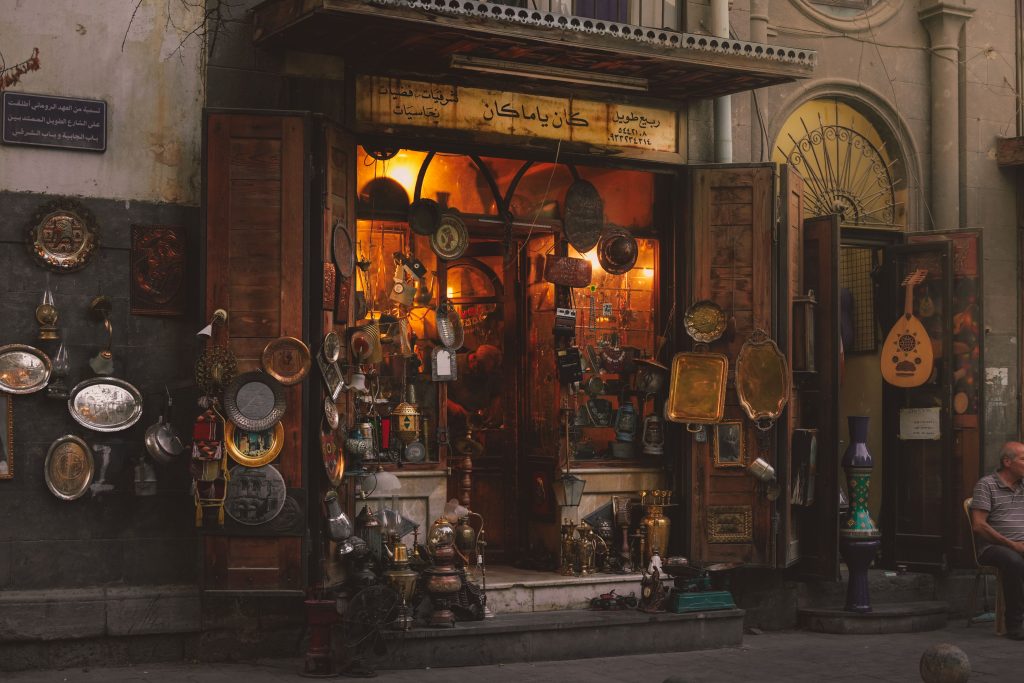
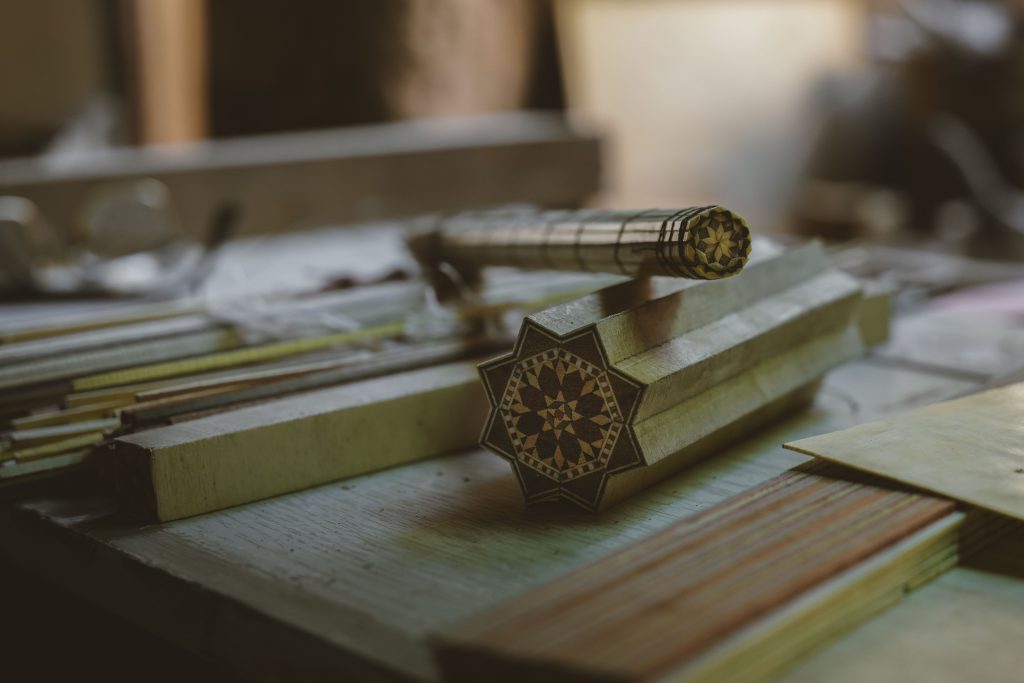
The city has a long tradition of craftsmanship. Damascus gave its name to damask fabric and to Damascus steel, and local artisans still produce brocade, copperwork, glass and detailed wood inlay made with mother of pearl. Watching a craftsman at work in a small Old City workshop is one of the simple pleasures of a visit.
Café culture is a big part of daily life. People meet over tea, Arabic coffee and argileh (water pipe), play backgammon and talk for hours. Some cafés near the Umayyad Mosque are known for the tradition of the hakawati, a storyteller who once entertained audiences with long tales of heroes and adventures.
Food in Damascus
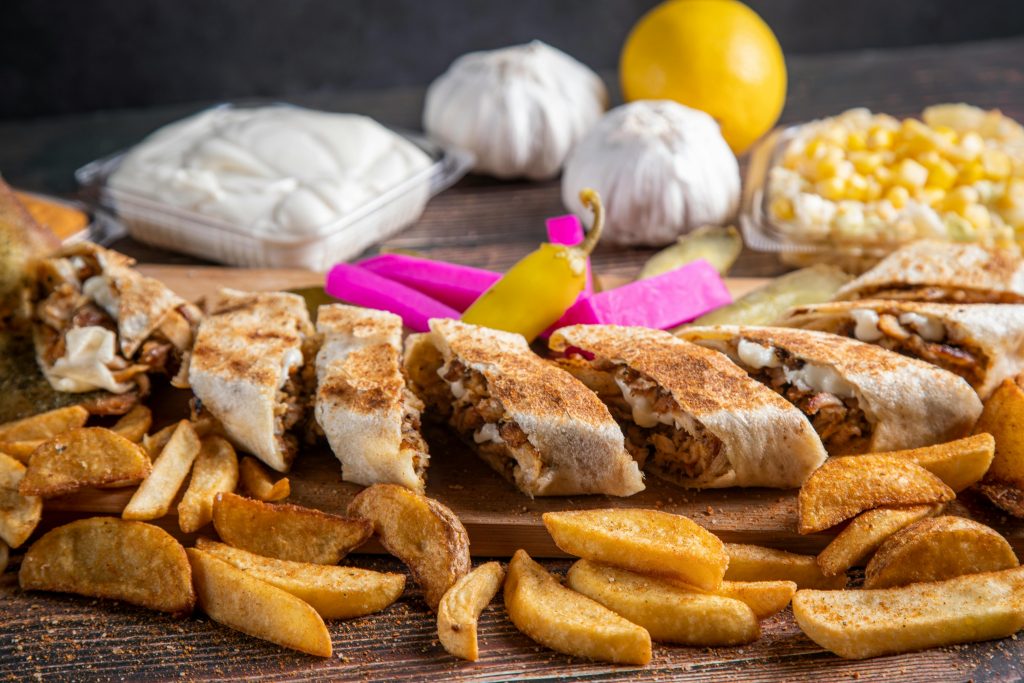
Damascene cuisine is famous across the Arab world, and eating is one of the best ways to get to know the city. A typical breakfast might include ful (stewed fava beans), hummus, labneh, olives, fresh bread and fatteh, a dish of bread, chickpeas, yogurt and tahini that Damascus is especially known for.
During the day, falafel and shawarma stands are everywhere. For a bigger meal, try kibbeh in its many forms, grilled meats, muhammara (a red pepper and walnut dip), stuffed vegetables and seasonal salads like fattoush and tabbouleh, all shared mezze style around the table.
Damascus also has a serious sweet tooth. Bakeries sell baklava, barazek (sesame and pistachio cookies) and many kinds of knafeh. In Souq al-Hamidiyah, the historic Bakdash ice cream parlor has been serving its stretchy booza, made with mastic and covered in pistachios, since the late 19th century. Wash it all down with fresh juice from a street stand or a small cup of strong Arabic coffee.
The People of Damascus
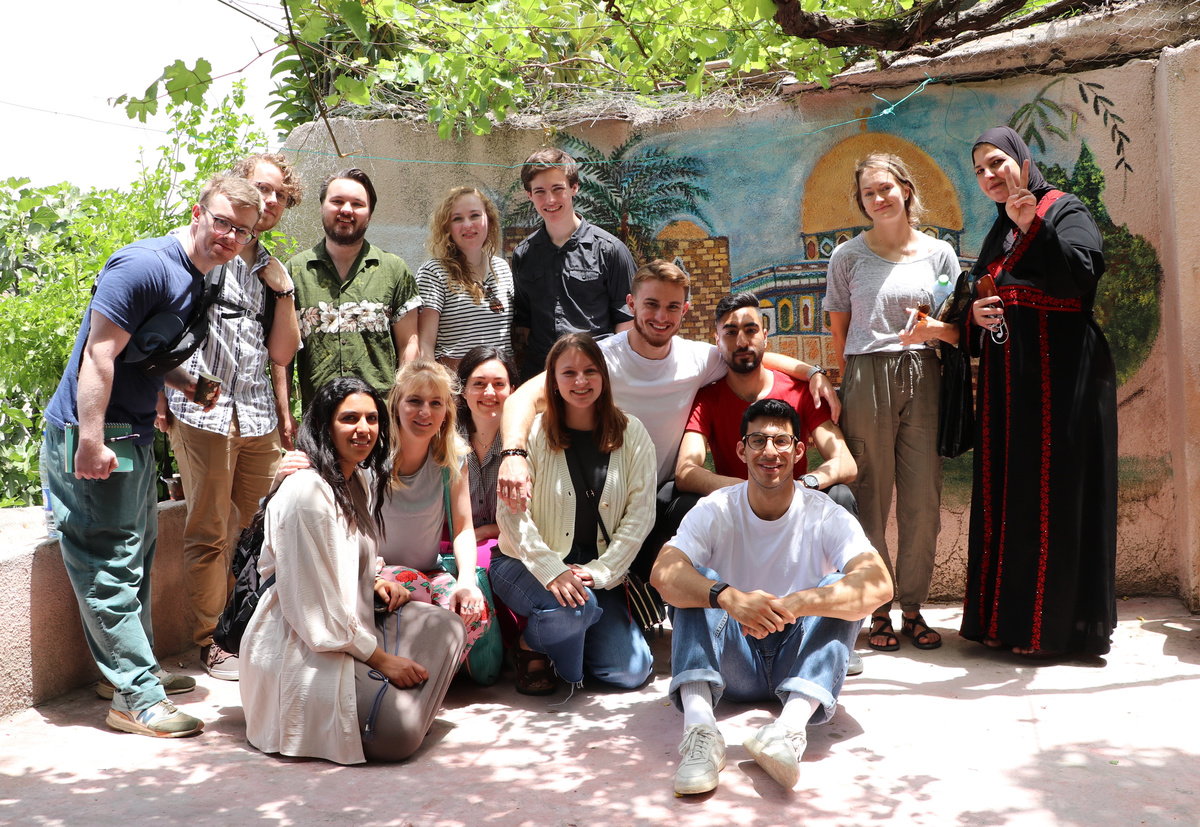
Damascenes are known for their warmth, humor and generous hospitality. Visitors are often welcomed with “ahlan wa sahlan” and invited to share tea, a meal or a long conversation. Shopkeepers chat with their customers, neighbors know each other by name, and family life is at the center of everything.
The city is also home to a mix of communities, with mosques and churches standing side by side in the Old City. For language learners, this everyday friendliness is a gift: people are patient with learners, and every conversation in a shop, taxi or café is a chance to practice your Syrian Arabic.
Day Trips from Damascus
Damascus is also a good base for exploring the region. One popular trip is Maaloula, a mountain village where some residents still speak a form of Western Aramaic, the language spoken in the region in the time of Jesus. Another option is Bosra in the south, known for its remarkably well preserved Roman theater built from black basalt. Our tours and excursions page has more ideas for trips around Syria.
Learn Arabic, Volunteer or Intern in Damascus
Volunteer in Syria is based in Damascus, which makes it easy to combine Arabic lessons with daily life in the city. Our Intensive Syrian Arabic Program gives you lessons with native Syrian teachers, and the city becomes your classroom between classes. Many students choose a homestay with a Syrian family to practice even more.
If you want to give something back while you learn, you can join one of our internship programs in Syria or our volunteer programs in Syria, with placements in education, media, community development and more. If you are planning your trip, read our guide to flying to Syria.
Any Questions?
If you have questions about visiting Damascus or joining one of our programs, please get in touch. Our team is happy to help you plan your stay.
Find Us Online
Do you have questions about our work? Contact us:
Email: Info@ecsyria.org
EC Website: https://excellencenter.org/
Instagram: https://www.instagram.com/excellence.center
Facebook page: https://www.facebook.com/ExcellenceCenter
Watch us on YouTube: https://www.youtube.com/channel/UCsQSLdFZWZcBm6Uj0XMYuKg